


Your cart is empty

In this article
- Key points
- Where the idea of taking breaks comes from
- What upper intake levels say about taking something long-term
- Taking vitamin D3 and K2 long-term?
- Glutathione and coenzyme Q10: what studies over several months show
- When check-ups or breaks make sense
- Do you always need breaks? Our verdict: not quite
- Taking vitamins long-term: frequently asked questions
- Sources
At a glance
- Whether you can take a supplement continuously depends on the substance and the amount. There’s no fixed rule that you always have to take breaks.
- For vitamins and minerals, there are upper intake levels that are expressly set for daily intake over a long period.
- For glutathione and coenzyme Q10, there are studies and safety data covering intake over several months.
- Our verdict: the saying ‘you always have to take breaks’ isn’t quite right. What matters is the right amount and, where it makes sense, having your blood levels checked by your doctor.
Where the idea of taking breaks comes from
Many people have been told to ‘take a break after three months’, or that ‘otherwise your body gets used to it’. That idea doesn’t fit vitamins and minerals well, because your body needs them every day. What matters is the total amount you take in. If you take high-dose supplements and also eat fortified foods, your total intake can end up high1.
It’s a different story for plant extracts and other substances that aren’t vitamins or minerals. No authority has set official upper limits for them. Instead, guidance comes from studies that have followed people taking them over a longer period. That’s why it’s worth looking at the two groups separately.
What upper intake levels say about taking something long-term
For vitamins and minerals, the European Food Safety Authority (EFSA) sets tolerable upper intake levels2. This is the amount that, taken every day over a long period from all sources, has no adverse effects on health according to current knowledge1. In other words, these values are expressly intended for long-term intake.
So for the question of breaks: if you stay below these limits over the long term, upper limits give you no reason to take a break. If you take several supplements containing the same nutrient, add the amounts together. For what’s known about the limits for individual vitamins, read Can you overdose on vitamins?
Taking vitamin D3 and K2 long-term?
Vitamin D is fat-soluble and is stored in the body, so stick to the recommended daily amount and add up the vitamin D you get from different supplements and fortified foods. A blood test shows your vitamin D status. If you take vitamin D over many months, ask your doctor to check this level.
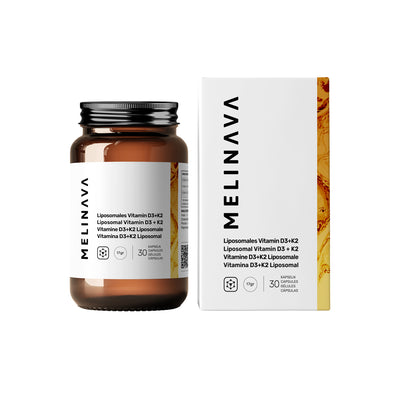
Vitamin K2 is often sold together with D3. At Melinava, for example, it comes in our Liposomal Vitamin D3+K2 (Capsules). Because vitamin K can interact with some medicines, check with your doctor first if you take any medicines. Why the two are so often combined is explained in Why take vitamin D3 with K2?
Glutathione and coenzyme Q10: what studies over several months show
In one study, 54 adults took 250 mg or 1,000 mg of glutathione or a placebo every day for six months. After one, three and six months, glutathione levels in the blood were higher than at the start in both dose groups. After a one-month break, they were back to their starting level3. So the higher levels lasted only as long as the participants kept taking glutathione.
A review of the safety of coenzyme Q10, drawing on clinical trials, identifies an observed safe level of 1,200 mg per day. Q10 taken as a supplement didn’t change the body’s own production, and there was no accumulation in the blood or tissues after people stopped taking it4. However, the authors worked for a company in the industry4. For more on the substance itself, see Coenzyme Q10 simply explained.
6 months
was the length of a study in which 54 adults took glutathione every day3.
1,200 mg
of coenzyme Q10 a day is the observed safe level named by a review of clinical trials4.
When check-ups or breaks make sense
In some cases, it’s a good idea to talk to your doctor before you take a supplement long-term, for instance if:
- you take several supplements containing the same nutrient
- you take any medicines, or you’re pregnant or breastfeeding
- you take vitamin D or iron for many months, as your blood levels then show whether the amount is right
- it’s a plant extract such as ashwagandha, for which there are no tolerable upper intake levels like those for vitamins
Whether you take a supplement continuously or with breaks, the same rule applies. Do not exceed the recommended daily amount.
Good to know A break is no substitute for the right dose. If you take too much over the long term, a few weeks off won’t solve the problem. And if you stay within the limits, you don’t need a break as far as upper limits are concerned.
Do you always need breaks? Our verdict: not quite
The rule ‘you always have to take breaks’ isn’t correct as a blanket rule. For vitamins and minerals, what counts is the daily amount over the long term, not the calendar. For other substances, the length of the studies and advice from your doctor help you decide. And our products? Manufactured to European pharmaceutical quality.
Taking vitamins long-term: frequently asked questions
Can I take vitamin D3 and K2 long-term?
Yes, as long as the total amount is right. Stick to the recommended daily amount and add up the vitamin D from all your supplements. If you take it for a longer period, ask your doctor to check your vitamin D level. For tips on taking it, see Vitamin D3 and K2: when and how to take it.
Can you take glutathione long-term?
In a six-month study with 54 adults, blood levels were higher than at the start while they took it daily, and fell again after they stopped3. There’s no official upper limit for glutathione. If you take any medicines, check with your doctor first.
Can you take coenzyme Q10 long-term?
A review names 1,200 mg per day from clinical trials as the observed safe level, although its authors come from industry4. Once people stopped taking it, there was no accumulation of Q10 in the body4. If you take any medicines, check with your doctor first.
Can you take ashwagandha long-term?
For plant extracts such as ashwagandha, there are no tolerable upper intake levels like those for vitamins. If you’d like to take ashwagandha for many months, discuss it with your doctor, especially if you take any medicines. To find out more about the root, read Ashwagandha and KSM-66.
Related product
Liposomal Vitamin D3+K2 (Capsules)
Manufactured to European pharmaceutical quality.
£38.00
View product
Sources
- Bundesinstitut für Risikobewertung (2024). Aktualisierte Höchstmengenvorschläge für Vitamine und Mineralstoffe in Nahrungsergänzungsmitteln und angereicherten Lebensmitteln. Stellungnahme 006/2024. Link
- EFSA Panel on Nutrition, Novel Foods and Food Allergens (NDA), Turck D, Bohn T, et al. (2022). Guidance for establishing and applying tolerable upper intake levels for vitamins and essential minerals. EFSA Journal 20(1):e200102. DOI
- Richie JP Jr, Nichenametla S, Neidig W, et al. (2015). Randomized controlled trial of oral glutathione supplementation on body stores of glutathione. European Journal of Nutrition 54(2):251-263. DOI
- Hidaka T, Fujii K, Funahashi I, Fukutomi N, Hosoe K (2008). Safety assessment of coenzyme Q10 (CoQ10). BioFactors 32(1-4):199-208. DOI
This article is for general information only and should not replace medical advice. Food supplements are not a substitute for a balanced and varied diet and a healthy lifestyle.
Written by
Melinava Editorial Team