


Your cart is empty

In this article
The key points in brief
- Liposomal vitamins come as single vitamins (such as C, B12 or D3), as combinations (such as D3 with K2), and as a B complex or a multivitamin.
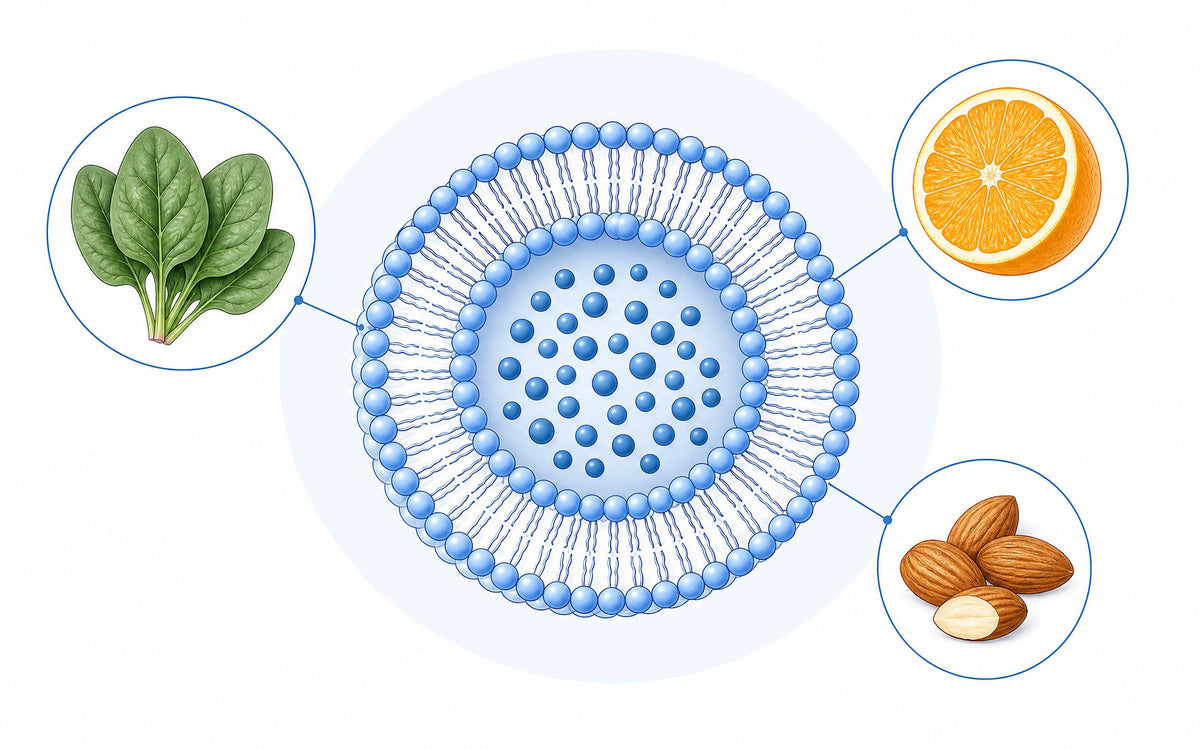
- Water-soluble vitamins sit in the watery core of the liposome, while fat-soluble vitamins sit in its shell of phospholipids.
- Liposomal vitamin C is well studied: in almost all comparison studies, blood levels were higher than with conventional vitamin C.
- Whether you choose drops or capsules mainly comes down to your daily routine. Either way, stick to the daily amount stated on the label.
What makes a vitamin liposomal?
In a liposomal vitamin, the vitamin is packed inside liposomes: tiny vesicles made of phospholipids. Liposomes can carry both water-soluble and fat-soluble substances, vitamins included1. The vitamin itself stays the same; only its packaging changes. Our article on what ‘liposomal’ means explains the term in detail.
So why go to the trouble? Vitamins are delicate. Heat, light, oxygen, changes in acidity (pH) and digestion can all break them down, and encapsulation is meant to act as a barrier against this2. Whether that leads to higher blood levels is something studies have to examine separately for each vitamin.
Which liposomal vitamins are there?
Vitamins fall into two groups: water-soluble and fat-soluble. Water-soluble vitamins fit in the watery core of the liposome, and fat-soluble ones fit in its shell. The liposomal supplements available include:
- Vitamin C: water-soluble. Vitamin C contributes to the normal function of the immune system.
- Vitamin B12 and the B complex: water-soluble. Vitamin B12 contributes to the reduction of tiredness and fatigue.
- Vitamin D3: fat-soluble, often combined with vitamin K2. Vitamin D contributes to the normal function of the immune system. Vitamin K contributes to the maintenance of normal bones.
- Vitamin A: fat-soluble. Vitamin A contributes to the maintenance of normal vision.
- Multivitamins: several vitamins combined in one supplement.
What studies on liposomal vitamins measure
Liposomal vitamin C is comparatively well studied. A review found ten human studies that compared it with conventional vitamin C. In nine of them, blood levels were higher with the liposomal form3. However, the formulations and amounts varied widely, which makes it difficult to compare the studies directly3.
In a double-blind study, 27 adults each took 500 mg of liposomal vitamin C, 500 mg of conventional vitamin C and a placebo, on different days. With the liposomal form, the peak level in blood plasma was 27% higher, and the level calculated over 24 hours was 21% higher4. The study looked at a single dose of one specific formulation4.
9 out of 10
comparison studies on vitamin C measured higher blood levels with the liposomal form3
27%
higher peak level of vitamin C in blood plasma with the liposomal form4
Drops or capsules: which suits you?
‘Liposomal’ describes the packaging, not the form you take it in. That's why liposomal vitamins come as both drops and capsules. Drops make it easy to adjust the amount and suit anyone who doesn't like swallowing capsules. Capsules are taste-free, precisely dosed and handy when you're out and about.
With vitamin D3, K2 and the B vitamins, the everyday questions are often practical ones of this kind. Combinations such as D3 with K2 save you buying a second product, and a B complex brings several B vitamins together in one daily dose. At Melinava you'll find, for example, Liposomal Vitamin D3+K2 (Capsules), Liposomal Vitamin B Complex and Liposomal Multivitamins. There's more on choosing the form in our article on drops, capsules or powder.
What to look for in liposomal vitamins
- Phospholipids or lecithin are listed in the ingredients.
- The daily amount of each vitamin is clearly stated, ideally with its percentage of the reference intake (% RI).
- Take fat-soluble vitamins such as D3 and K2 with a meal that contains some fat. In one study, the peak blood level of vitamin D3 was 32% higher after a meal containing fat than after a fat-free one5.
- If you take several supplements, add up the amounts of any vitamin that appears in more than one of them.
Do not exceed the recommended daily amount. You'll find more points to check in our article on how to recognise a good liposomal supplement. Our liposomal vitamins are manufactured to European pharmaceutical quality.
Frequently asked questions about liposomal vitamins
What can reviews and other people's experiences tell you about liposomal vitamins?
Reviews and personal experiences describe individual impressions, for example of the taste, how easy a product is to take or how well it's tolerated. What they can't show is how much of a vitamin reaches the blood: that's what studies measure. When you're choosing, the two complement each other. Studies show what's known about the form, and other people's experiences show how a product works in everyday life.
Are there liposomal B vitamins?
Yes. There are single B vitamins such as B12, and there's a B complex that combines several B vitamins. All B vitamins are water-soluble and sit inside the liposomes. You'll find the different forms of B12 in our article on which vitamin B12 to choose.
What is liposomal vitamin D?
Vitamin D3 is fat-soluble and sits in the shell of the liposomes. It's often combined with vitamin K2. Why the two are so often offered together is explained in our article on why vitamin D3 is paired with K2.
Related product
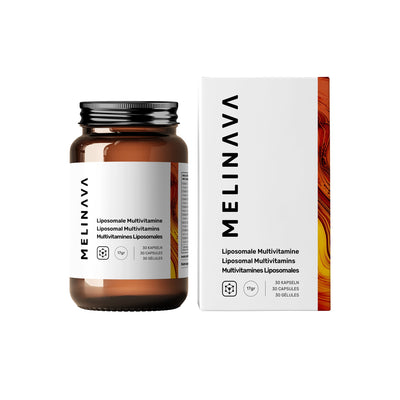
Liposomal Multivitamins
Manufactured to European pharmaceutical quality.
£35.00
View product
Sources
- Mankan E, Karakas CY, Saroglu O, Mzoughi M, Sagdic O, Karadag A (2025). Food-Grade Liposome-Loaded Delivery Systems: Current Trends and Future Perspectives. Foods 14(17):2978. DOI
- Erem E, Ozkan G, Şahin-Yeşilçubuk N, Kilic-Akyilmaz M (2025). Stability, bioaccessibility and bioavailability of vitamins in different delivery systems. Food Chemistry 492:145452. DOI
- Carr AC (2025). Do Liposomal Vitamin C Formulations Have Improved Bioavailability? A Scoping Review Identifying Future Research Directions. Basic & Clinical Pharmacology & Toxicology 137(1):e70067. DOI
- Purpura M, Jäger R, Godavarthi A, Bhaskarachar D, Tinsley GM (2024). Liposomal delivery enhances absorption of vitamin C into plasma and leukocytes: a double-blind, placebo-controlled, randomized trial. European Journal of Nutrition 63(8):3037-3046. DOI
- Dawson-Hughes B, Harris SS, Lichtenstein AH, Dolnikowski G, Palermo NJ, Rasmussen H (2015). Dietary Fat Increases Vitamin D-3 Absorption. Journal of the Academy of Nutrition and Dietetics 115(2):225-230. DOI
This article is for general information only and should not replace medical advice. Food supplements are not a substitute for a balanced and varied diet and a healthy lifestyle.
Written by
Melinava Editorial Team