


Your cart is empty

In this article
At a glance
- No time of day has been shown to be better than another for magnesium. Take it whenever it fits reliably into your day, morning or evening.
- A meal is a good time to take it. In one study on absorption, magnesium was given with a meal, too.
- The body absorbs a smaller proportion of a large dose, so larger amounts are best split between two times of day.
- Very high amounts of zinc can reduce magnesium absorption. That’s one more reason not to take more than the recommended daily amount.
If you take magnesium every day, sooner or later you’ll wonder when the right moment is. The short answer: the time on the clock is secondary. What matters more is how much you take at once, taking it with a meal, and taking it regularly.
Is there a right time of day for magnesium?
We haven’t found any study that directly compares magnesium absorption in the morning with absorption in the evening. So there’s no evidence-based recommendation for a particular time of day. Among other things, magnesium contributes to normal muscle function, and magnesium contributes to normal energy-yielding metabolism1. These authorised health claims don’t depend on a particular time of day.
What matters most is taking magnesium regularly and keeping to the recommended daily amount. So choose a time you’ll find easy to stick to, such as breakfast or your evening meal. A settled habit does more for you than the perfect time on the clock.
Before or after a meal?
In one study on absorption, healthy adults were given magnesium with a standard meal2. Magnesium from almonds was absorbed just as well as magnesium from a readily soluble magnesium salt2. So a meal doesn’t get in the way of absorption. Whether shortly before, during or after the meal is better can’t be concluded from this study.
A meal is a simple anchor in your day anyway: the pack sits next to your plate and doesn’t get forgotten. If magnesium sits uneasily on an empty stomach, taking it with a meal is the more comfortable choice. Which supplements suit an empty stomach and which are better with food is explained in our article on taking supplements on an empty stomach or with food.
Why the amount per dose matters
How much of a nutrient the body actually absorbs is described by its bioavailability. For magnesium, the proportion absorbed depends heavily on how much is taken at once. In the study mentioned above, the amount absorbed did rise with each increase, but the proportion fell markedly: from 65% at the lowest amount to 11% at the highest2. So the body absorbs smaller doses proportionally better.
65%
of the magnesium was absorbed at the lowest amount per meal2
11%
was absorbed at the highest amount per meal2
If your daily amount is on the larger side, you can simply split it between two times of day, for example breakfast and your evening meal. How well you tolerate it is another reason to do this: larger amounts of magnesium from supplements can loosen the stools3.
A review published in 2023 puts this into perspective, though: in seven of the ten studies examined, loose stools were not clearly more common with magnesium than in the comparison groups3. If you’re sensitive, smaller doses are still a sensible choice.
Why do many people take magnesium in the evening?
The evening is a popular time, often simply because magnesium fits neatly into an evening routine. There’s no evidence that the body absorbs it better in the evening. One of the authorised health claims is that magnesium contributes to normal functioning of the nervous system1. This claim, too, applies whatever the time of day.
What studies on magnesium and sleep have looked at, and where their limits lie, is covered in our article on magnesium and sleep. If you’d rather take magnesium in the morning, there’s no reason not to.
Zinc and medicines: what to bear in mind
Minerals can affect each other’s absorption, especially in high amounts. In a study in adult men, 142 mg of zinc a day markedly reduced magnesium absorption4. That’s many times the reference value for adults that EFSA sets for daily zinc intake5. Which minerals combine well is covered in our article ‘Magnesium, zinc and iron: which minerals go together?’
With medicines, too, the time between taking them and taking magnesium can matter. If you take any medicines, check with your doctor first.
When to take magnesium: the short answer
The right time for magnesium is the one you’ll stick to. Feel free to take it with a meal, split larger amounts into two doses and avoid very high amounts of zinc. Don’t take more than the recommended daily amount.
Frequently asked questions about taking magnesium
Is magnesium better taken in the morning or at night?
Neither has been shown to be better. Choose the time of day you can stick to most easily. Larger amounts can also be split between morning and evening.
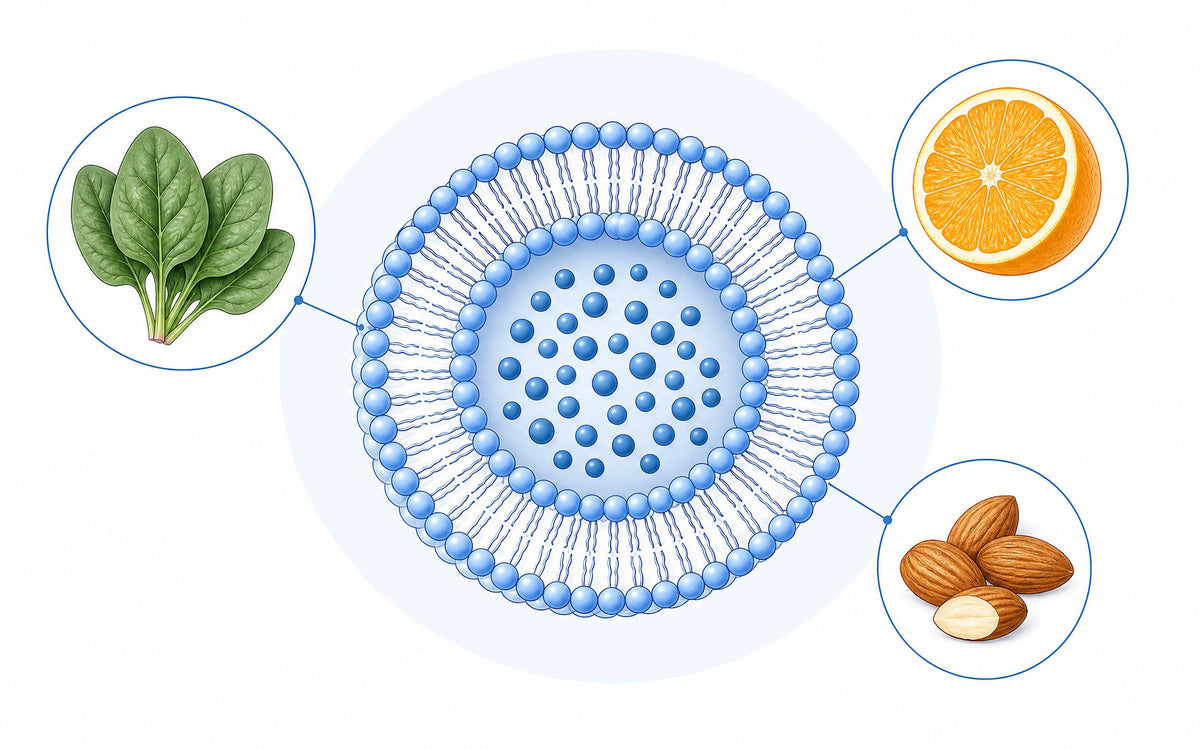
When should I take liposomal magnesium?
The same basic rules apply to liposomal magnesium: take it regularly, ideally with a meal, and keep to the recommended daily amount on the label. Which form of magnesium suits you depends mainly on how well you tolerate it and on your daily routine. You’ll find an overview in our comparison of magnesium forms.
Should I take magnesium before or after exercise?
We’re not aware of any studies comparing timing around exercise. Magnesium contributes to normal muscle function1. Taking it regularly matters more than whether you take it before or after exercise. If your stomach is sensitive during exercise, it’s better to take it with the meal afterwards.
Sources
- European Commission (2012). Commission Regulation (EU) No 432/2012 of 16 May 2012 establishing a list of permitted health claims made on foods, other than those referring to the reduction of disease risk and to children’s development and health. Link
- Fine KD, Santa Ana CA, Porter JL, Fordtran JS (1991). Intestinal absorption of magnesium from food and supplements. Journal of Clinical Investigation 88(2):396-402. DOI
- Costello R, Rosanoff A, Nielsen F, West C (2023). Perspective: Call for Re-evaluation of the Tolerable Upper Intake Level for Magnesium Supplementation in Adults. Advances in Nutrition 14(5):973-982. DOI
- Spencer H, Norris C, Williams D (1994). Inhibitory effects of zinc on magnesium balance and magnesium absorption in man. Journal of the American College of Nutrition 13(5):479-484. DOI
- EFSA Panel on Dietetic Products, Nutrition and Allergies (2014). Scientific Opinion on Dietary Reference Values for zinc. EFSA Journal 12(10):3844. DOI
This article is for general information only and should not replace medical advice. Food supplements are not a substitute for a balanced and varied diet and a healthy lifestyle.
Written by
Melinava Editorial Team