


Your cart is empty

In this article
At a glance
- Vitamin D3 and K2 as drops or capsules: both forms contain the same two vitamins. Which one suits you better comes down mainly to your everyday life.
- Drops let you fine-tune the amount and are more comfortable if you don’t like swallowing capsules.
- Capsules have no taste, each one holds exactly the same amount, and they’re handy when you’re travelling.
- Whichever you choose, take it with a meal that contains a little fat if you can, and don’t take more than the recommended daily amount.
Vitamin D3 and K2 are often sold together, sometimes as drops, sometimes as capsules. The vitamins are the same; what differs is how you take them. This comparison looks at what makes a difference day to day and helps you find the form you’ll be happy to take every day.
Why take vitamin D3 and K2 together?
Both vitamins play a part in your bones. Vitamin D and vitamin K contribute to the maintenance of normal bones1. Vitamin D also contributes to the normal function of the immune system1. Why the two are so often combined in one product is explained in our article Why take vitamin D3 with K2?
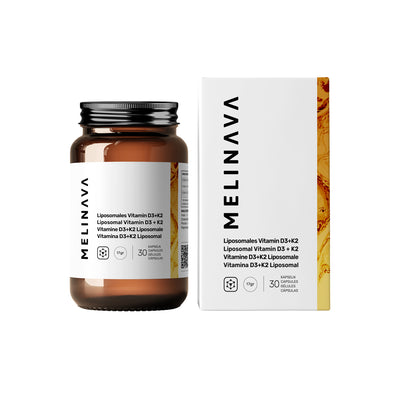
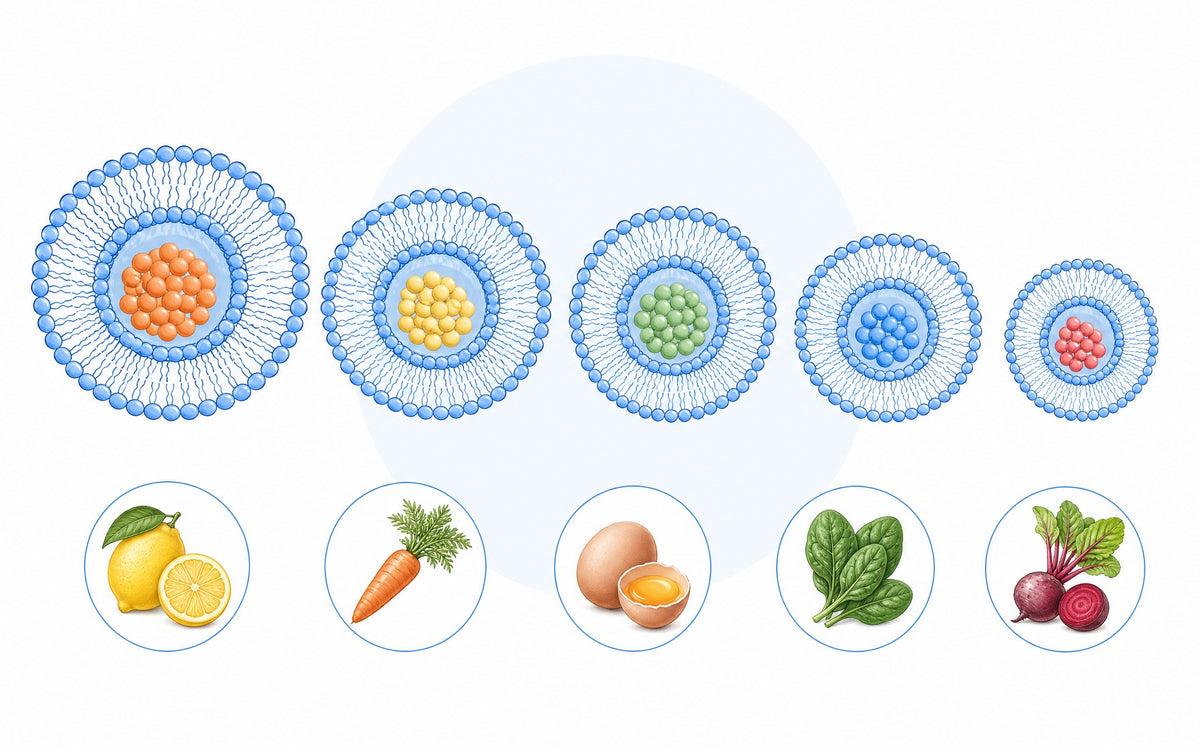
Both vitamins are fat-soluble. In liposomal products such as our Liposomal Vitamin D3+K2 (Capsules), they’re enclosed in tiny vesicles made of phospholipids. That describes how the vitamins are packaged, not the dosage form: in general, there are liposomal drops as well as liposomal capsules.
Drops: easy to fine-tune and easy to swallow
You count out the drops and take them straight from a spoon or in a little liquid, as the label tells you. That makes drops a more comfortable choice if you find capsules hard to swallow. And you’re not alone: in a survey carried out in eleven GP practices, 37.4% of 1,051 participants said they had found it difficult to swallow tablets or capsules at some point. Women reported this more often than men2.
There’s another point in favour of drops: you can adjust the amount drop by drop, for example if your doctor has recommended a particular daily amount. Shake the bottle before use if the label says so, and once it’s open, follow the storage instructions on the pack.
Capsules: no taste and easy to take with you
Capsules have no taste, and every capsule contains the same amount. There’s no counting and no shaking. They don’t leak, and they fit in a handbag, a desk drawer or a washbag.
For many people, the simplest way to keep it up is to take the capsules every day with the same meal. Our Liposomal Vitamin D3+K2 (Capsules) from Melinava are designed for this. Keep capsules somewhere dry and cool, away from light, so a kitchen cupboard is a better place than a steamy bathroom.
How should you take vitamin D3 and K2?
Whether you choose drops or capsules, it’s best to take them with a meal that contains a little fat. In a study of 50 healthy older adults, the peak level of vitamin D3 in the blood was on average 32% higher when the vitamin was taken with a meal containing fat rather than a fat-free one3. Bear in mind, though, that the study only tested a single, very high dose.
Take your daily dose with the same meal each day, such as breakfast or lunch. You’ll find more on timing in our article Vitamin D3 and K2: when and how to take them. And don’t take more than the recommended daily amount.
Drops or capsules: which form suits you?
The right form is the one you’ll take reliably every day. These questions will help you decide.
- Swallowing: if you find capsules hard to swallow, drops are often the more pleasant choice.
- Adjusting the amount: if you want to set the amount yourself in line with your doctor’s advice, drops give you more room to do that.
- Taste: if you’d rather not taste anything at all, capsules are the neutral choice.
- On the go: when you’re travelling or at work, capsules are handy because there’s nothing to measure.
- Morning routine: if you have time for a relaxed breakfast, either form works well. If you have to rush out of the door, capsules are often quicker.
For a general overview of the different forms, see our article Drops, capsules or powder: which form suits you?
Good to know If you switch between drops and capsules, read the label of the new product. The amount per drop and per capsule isn’t the same, and the recommended daily amount is given on each pack. If you take any medicines, check with your doctor first.
Frequently asked questions about vitamin D3 and K2 drops or capsules
Vitamin D3 K2: drops or capsules, which is better?
It depends mainly on what you find easier in everyday life. Drops let you fine-tune the amount and are easy to swallow; capsules have no taste and are handy on the go. Choose the form you’ll take reliably every day.
How do I take vitamin D3 K2 drops?
Count out the number of drops given on the label and take them from a spoon or in a little liquid, ideally with a meal that contains a little fat. Shake the bottle first if the label says so, and don’t take more than the recommended daily amount.
What does liposomal vitamin D3 K2 mean?
Liposomal means the vitamins are enclosed in tiny vesicles made of phospholipids. This is available both as drops and as capsules, as our article Liposomal or capsules? explains. For our liposomal products, we use phospholipids from European sunflowers.
Related product
Liposomal Vitamin D3+K2 (Capsules)
Manufactured to European pharmaceutical quality.
£38.00
View product
Sources
- European Commission (2012). Commission Regulation (EU) No 432/2012 of 16 May 2012 establishing a list of permitted health claims made on foods, other than those referring to the reduction of disease risk and to children’s development and health. Link
- Schiele JT, Quinzler R, Klimm HD, Pruszydlo MG, Haefeli WE (2013). Difficulties swallowing solid oral dosage forms in a general practice population: prevalence, causes, and relationship to dosage forms. European Journal of Clinical Pharmacology 69(4):937-948. DOI
- Dawson-Hughes B, Harris SS, Lichtenstein AH, Dolnikowski G, Palermo NJ, Rasmussen H (2015). Dietary fat increases vitamin D-3 absorption. Journal of the Academy of Nutrition and Dietetics 115(2):225-230. DOI
This article is for general information only and should not replace medical advice. Food supplements are not a substitute for a balanced and varied diet and a healthy lifestyle.
Written by
Melinava Editorial Team