

Your cart is empty

In this article
Key points
- Yes, you can take vitamin D3, K2 and magnesium together, ideally with a meal that contains a little fat.
- Vitamin D3 and K2 are fat-soluble. In one study, vitamin D3 levels in the blood were higher when the meal contained fat.
- A review describes how the enzymes that convert vitamin D in the body apparently need magnesium, but that is not an authorised health claim. The authorised claim is that vitamin D, vitamin K and magnesium each contribute to the maintenance of normal bones.
- If you take any medicines, especially blood-thinning medicines, speak to your doctor first.
Vitamin D3 and K2 often come together in one product, and many people take magnesium as well. So the question is a practical one: can you take all three at once, and when? We’re not aware of any evidence that the three get in the way of each other’s absorption. What matters is the meal and how much magnesium you take at a time.
What links vitamin D3, K2 and magnesium
All three nutrients have authorised health claims, and they overlap when it comes to bones1:
- Vitamin D contributes to normal absorption/utilisation of calcium and phosphorus. Vitamin D contributes to the maintenance of normal bones.
- Vitamin K contributes to the maintenance of normal bones. Vitamin K contributes to normal blood clotting.
- Magnesium contributes to the maintenance of normal bones. Magnesium contributes to normal muscle function.
Why D3 and K2 are so often sold together is explained in our article Why take vitamin D3 with K2?
Why take magnesium and vitamin D together?
Vitamin D is converted in the body in several steps, mainly in the liver and kidneys. A review describes how the enzymes that process vitamin D apparently all need magnesium2. The authors therefore advise making sure you get the recommended intake of magnesium2.
In a randomised study of 180 adults aged 40 to 85, the effect of extra magnesium on blood vitamin D levels depended on where people started. With a starting level of around 30 ng/ml, vitamin D rose with magnesium; at higher starting levels, between about 30 and 50 ng/ml, it fell instead3. The researchers conclude that a good magnesium status could be important for vitamin D metabolism3.
There is no authorised health claim for this interplay between magnesium and vitamin D1. Whether you need extra magnesium depends mainly on how much you already get from your diet. If you take both, you can have them with the same meal.
When to take them, and with what?
Vitamin D3 and K2 are fat-soluble, so the meal is what matters most.
In a study of 50 healthy older adults, the peak level of vitamin D3 in the blood was 32% higher when it was taken with a meal containing fat rather than a fat-free meal4. For vitamin K there is a small study with five participants, but it looked at vitamin K1 from spinach rather than K2: with butter, more of it reached the blood than without5.
To our knowledge, taking them in the morning and in the evening has not been compared. Simply take all three with a meal that contains a little fat, such as a breakfast with egg, yoghurt or nuts, or with your evening meal. There’s more on timing in our article Vitamin D3 and K2: when should you take them?
How much magnesium at once?
With magnesium, the amount you take at a time matters. In a study in which magnesium was given with a standard meal, the proportion absorbed fell as the amount went up: from 65% at the lowest amount to 11% at the highest6. So if your daily amount of magnesium is on the larger side, you can split it: take one part with vitamin D3 and K2, and the rest with another meal.
You’ll find more on this in our article Magnesium: when should you take it?
What to bear in mind
Vitamin K contributes to normal blood clotting1. If you take any medicines, speak to your doctor first. This applies especially to blood-thinning medicines.
Take vitamin D3 and K2 as directed on the label. Do not exceed the recommended daily amount. If you’d like to know your vitamin D level, have it measured by your doctor.
Vitamin D3, K2 and magnesium: the short answer
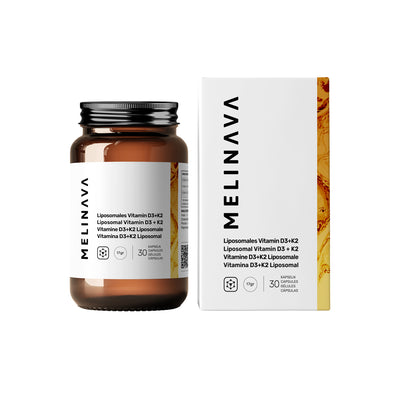
Vitamin D3, K2 and magnesium go well together when you take them with a meal that contains a little fat. Spread larger amounts of magnesium over two doses. Our Liposomal Vitamin D3+K2 (Capsules) are manufactured to European pharmaceutical quality.
Frequently asked questions about vitamin D3, K2 and magnesium
When should I take vitamin D3, K2 and magnesium?
With a meal that contains a little fat. The time of day matters less. Larger amounts of magnesium can be split over two meals.
Do I have to take magnesium with vitamin D?
No, you don’t have to. However, studies suggest that magnesium status could be important for vitamin D metabolism2,3. Whether you need extra magnesium depends on your diet.
Can I take all three together in the evening?
Yes, as long as your evening meal contains a little fat. There’s no evidence that evening is better or worse than morning.
Related product
Liposomal Vitamin D3+K2 (Capsules)
Manufactured to European pharmaceutical quality.
£38.00
View product
Sources
- European Commission (2012). Commission Regulation (EU) No 432/2012 of 16 May 2012 establishing a list of permitted health claims made on foods, other than those referring to the reduction of disease risk and to children’s development and health. Link
- Uwitonze AM, Razzaque MS (2018). Role of Magnesium in Vitamin D Activation and Function. Journal of the American Osteopathic Association 118(3):181-189. DOI
- Dai Q, Zhu X, Manson JE, et al. (2018). Magnesium status and supplementation influence vitamin D status and metabolism: results from a randomized trial. American Journal of Clinical Nutrition 108(6):1249-1258. DOI
- Dawson-Hughes B, Harris SS, Lichtenstein AH, Dolnikowski G, Palermo NJ, Rasmussen H (2015). Dietary fat increases vitamin D-3 absorption. Journal of the Academy of Nutrition and Dietetics 115(2):225-230. DOI
- Gijsbers BL, Jie KS, Vermeer C (1996). Effect of food composition on vitamin K absorption in human volunteers. British Journal of Nutrition 76(2):223-229. DOI
- Fine KD, Santa Ana CA, Porter JL, Fordtran JS (1991). Intestinal absorption of magnesium from food and supplements. Journal of Clinical Investigation 88(2):396-402. DOI
This article is for general information only and should not replace medical advice. Food supplements are not a substitute for a balanced and varied diet and a healthy lifestyle.
Written by
Melinava Editorial Team