

Your cart is empty

In this article
- Key points
- Two opinions, both too simple
- What ‘no deficiency’ means
- Vitamin B12: who should take a closer look
- Selenium: keep an eye on the total amount
- Iron: test first, then supplement
- Should you take supplements if you’re not deficient? How to find your answer
- Taking supplements if you’re not deficient? Our verdict: there’s no one-size-fits-all answer
- Frequently asked questions about supplements if you’re not deficient
- Sources
The key points in brief
- Should you take supplements if you’re not deficient? That depends on your diet, your stage of life and the nutrient.
- Not being deficient doesn’t automatically mean you’re getting the recommended intake. For some nutrients, some groups of people fall short of the recommendations.
- What matters is whether your diet covers your needs. In the assessment of the BfR, Germany’s Federal Institute for Risk Assessment, taking more than you need brings no additional benefit.
- Our verdict: there’s no one-size-fits-all answer. With iron, have your blood levels checked by a doctor first.
Two opinions, both too simple
Some people say: ‘If you’re not deficient, you don’t need anything.’ Others say: ‘It can’t do any harm.’ Both fall short. Between a deficiency and a good intake there’s a wide range, and not every amount is harmless for every nutrient.
What ‘no deficiency’ means
As a rule of thumb, the German Federal Institute for Risk Assessment (Bundesinstitut für Risikobewertung, BfR) says that a balanced, varied diet gives a healthy body enough of what it needs. However, some groups of people fall short of the recommended intake for certain nutrients, such as vitamin D, calcium, folic acid and iodine. That isn’t automatically a deficiency1.
That’s why the BfR considers supplements useful in individual cases, but not necessary for the majority of people who already get enough. In its assessment, taking more than you need brings no additional health benefit1. So the real question isn’t ‘Am I deficient or not?’ but ‘Am I getting the recommended amount?’
Authorised health claims also refer to normal body functions, not to a deficiency. One example: ‘Vitamin B12 contributes to normal energy-yielding metabolism’2.
Vitamin B12: who should take a closer look
According to the BfR, the healthy general population gets enough vitamin B12. People who eat a vegan diet get hardly any vitamin B12 from food. Without fortified foods or supplements, they have an increased risk of their intake being too low3.
Your vitamin B12 status can be checked with a blood test. If you’re unsure, have it checked by a doctor. Our article on the different forms of vitamin B12 explains how they differ.
Selenium: keep an eye on the total amount
Selenium contributes to the normal function of the immune system2. For adults, EFSA set a tolerable upper intake level of 255 µg per day in 2023. In EFSA’s assessment, adults hardly ever reach this amount unless they regularly take high-dose selenium supplements or regularly eat Brazil nuts4. So if you take selenium as a supplement, add up the amounts from all your products.
Iron: test first, then supplement
With iron, caution is advised. The body needs it, but in excess it can damage cells and tissue. That’s why the body has to keep tight control of its iron balance5.
So don’t take iron just on a hunch. Have your iron levels checked by a doctor before taking a product for any length of time, and stick to the recommended daily amount. You’ll find tips on taking it in our article on when to take iron.
About one third
of adults in Germany regularly take supplements, according to the BfR1
255 µg
of selenium per day is EFSA’s tolerable upper intake level for adults4
Should you take supplements if you’re not deficient? How to find your answer
A few questions will help you work out whether a supplement makes sense for you:
- Are whole food groups missing from your diet, such as animal products?
- Are you at a particular stage of life, such as pregnancy or breastfeeding?
- Do you know your blood levels? If you’re unsure, have them checked by a doctor, especially for iron, vitamin B12 and vitamin D.
- Do you know how well your body absorbs the nutrient from the product? This is what bioavailability describes.
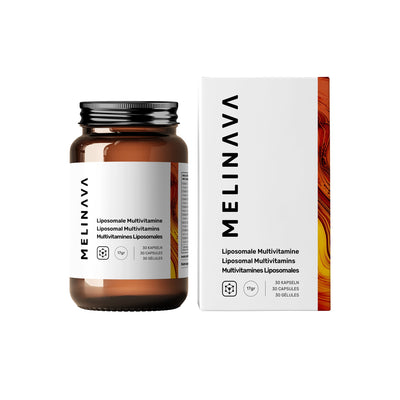
If you’d like to cover several vitamins with one product, you’ll find Liposomal Multivitamins at Melinava. Add up the amounts from all your products and don’t take more than the recommended daily amount. Our article on how to take supplements properly explains more.
Good to know: If you take any medicines, check with a doctor before taking a supplement. This applies to vitamins and minerals too.
Taking supplements if you’re not deficient? Our verdict: there’s no one-size-fits-all answer
Our verdict: there’s no one-size-fits-all answer. ‘If you’re not deficient, you don’t need anything’ doesn’t hold across the board, and neither does ‘it can’t do any harm’. It depends on the nutrient, the amount and your situation. With iron, your blood levels should decide, and vegans need a reliable source of vitamin B123. Manufactured to European pharmaceutical quality.
Frequently asked questions about supplements if you’re not deficient
Taking vitamin B12 if you’re not deficient: does it make sense?
If you eat a vegan diet, yes: you get hardly any vitamin B12 from food3. For everyone else, it depends on your diet and your blood level. If you’re unsure, have your level measured by a doctor.
Taking selenium if you’re not deficient: what should you watch out for?
Keep an eye on the total amount. EFSA’s tolerable upper intake level for adults is 255 µg per day, from all sources combined4. If you take several products containing selenium, add up the amounts.
Should you take iron if you’re not iron deficient?
Not without checking with a doctor first. Have your iron levels tested, then decide together with your doctor whether supplementing makes sense and for how long. Our article Can you overdose on vitamins? explains why you can have too much of some nutrients.
Related product
Liposomal Multivitamins
Manufactured to European pharmaceutical quality.
£34.00
View product
Sources
- Bundesinstitut für Risikobewertung (2024). Aktualisierte Höchstmengenvorschläge für Vitamine und Mineralstoffe in Nahrungsergänzungsmitteln und angereicherten Lebensmitteln. Stellungnahme 006/2024. Link
- European Commission (2012). Commission Regulation (EU) No 432/2012 of 16 May 2012 establishing a list of permitted health claims made on foods, other than those referring to the reduction of disease risk and to children’s development and health. Link
- Bundesinstitut für Risikobewertung (2021). Höchstmengenvorschläge für Vitamin B12 in Lebensmitteln inklusive Nahrungsergänzungsmitteln. Link
- EFSA Panel on Nutrition, Novel Foods and Food Allergens (NDA), Turck D, Bohn T, et al. (2023). Scientific opinion on the tolerable upper intake level for selenium. EFSA Journal 21(1):e07704. DOI
- Papanikolaou G, Pantopoulos K (2005). Iron metabolism and toxicity. Toxicology and Applied Pharmacology 202(2):199-211. DOI
This article is for general information only and should not replace medical advice. Food supplements are not a substitute for a balanced and varied diet and a healthy lifestyle.
Written by
Melinava Editorial Team