

Your cart is empty

In this article
At a glance
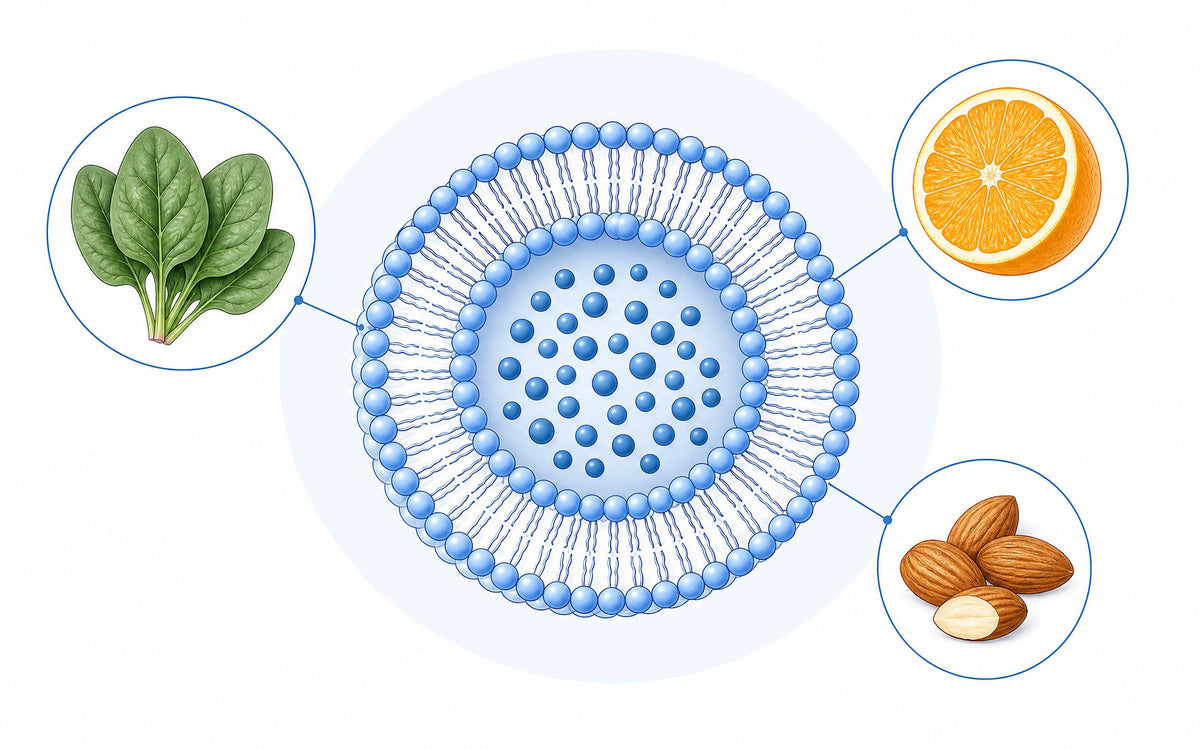
- Liposomal iron is an iron compound enclosed in liposomes: tiny vesicles made of phospholipids.
- The shell is designed to improve absorption and to reduce the side effects of iron on the digestive system.
- In one study with 25 healthy adults, blood iron levels rose more after a liposomal preparation than after a conventional one with the same ingredients.
- Only take iron once a doctor has checked your blood levels.
What is liposomal iron?
In liposomal iron, an iron compound is enclosed in liposomes. These are tiny vesicles with a shell made of phospholipids. For our liposomal products at Melinava, we use phospholipids from European sunflowers.
In a laboratory study, commercially available liposomal iron preparations had the shape and size of classic liposomes under an electron microscope. The vesicles also stayed stable when dried1. The authors see liposomes as a way to improve the bioavailability of iron and to reduce its side effects1. How liposomes work in principle is explained in our article on what liposomes are.
What does the body need iron for?
Iron is an essential trace element that the body has to get from food2. Several authorised health claims exist for iron. Iron contributes to normal formation of red blood cells and haemoglobin, and iron contributes to normal oxygen transport in the body. Iron also contributes to normal energy-yielding metabolism, and iron contributes to the reduction of tiredness and fatigue.
Iron also contributes to normal cognitive function, and iron contributes to the normal function of the immune system. In addition, iron has a role in the process of cell division.
Why the form of iron matters
The body absorbs only about 10 to 15% of the iron in food2. It absorbs iron from meat, poultry and fish about two to three times better than iron from plants2. Vitamin C aids the absorption of iron from plants, while tannins in black tea, coffee or red wine inhibit it2. There’s more on this in our article on taking vitamin C and iron together.
The body also adjusts absorption to its needs: when its stores are well stocked, it absorbs less iron. Iron is stored mainly as ferritin2.
With supplements, there’s another factor: how well you tolerate them. A meta-analysis looked at 43 studies with 6,831 adults. In the placebo-controlled studies, the risk of stomach and gut side effects with ferrous sulphate, a classic iron salt, was about 2.3 times as high as with a placebo3. Among other things, the liposomal shell is meant to reduce unwanted effects like these1.
What studies on liposomal iron measure
In a crossover study, 25 healthy adults took a multivitamin and mineral preparation on two occasions, once in liposomal form and once in conventional form. Both contained around 10 mg of iron4. Four hours after the liposomal form, blood iron was 14% above baseline; after the conventional form, it was 6% below4. The area under the curve was 50% larger with the liposomal form4.
The study has its limits. It looked at a single dose of a combination preparation, and experts from the study’s funder advised on the laboratory analyses and on interpreting the results4. It doesn’t show whether the values would be similar if the preparation were taken regularly.
A second study followed 80 healthy pregnant women until six weeks after giving birth. Those who took 14 or 28 mg of liposomal iron a day had higher haemoglobin and ferritin levels than the control group, who took no iron supplement5. The authors saw blood results similar to those with higher doses of conventional iron. However, the groups were small, with 20 women each5.
10 to 15%
of the iron in food is absorbed by the body2
50%
larger area under the curve for blood iron with the liposomal form4
Before you take it: have your iron levels checked
You can’t tell from your diet whether you have an iron deficiency. Only a blood test of your iron status and iron stores can show that2. The German Federal Institute for Risk Assessment (BfR) advises taking food supplements containing iron only if you have an increased need and after speaking to a doctor2. So have your levels checked by your doctor before you take iron.
Good to know: If you take any medicines, check with your doctor first. Do not exceed the recommended daily amount.
Liposomal iron in brief
Liposomal iron is mainly a question of how the iron is delivered. The iron itself stays the same; the shell is meant to improve absorption and tolerability.
Frequently asked questions about liposomal iron
How does liposomal iron work?
In the body, it behaves like iron from any other source, and the same authorised health claims apply: for example, iron contributes to normal oxygen transport in the body. The liposomal shell is about how the iron gets there: it’s meant to improve absorption1. An early study measured a greater rise in blood iron with it4.
Liposomal iron: liquid or capsules?
Both forms exist. In a laboratory study, liposomal iron vesicles stayed stable even when dried1. Which form suits you is mainly down to taste and your daily routine. You’ll find an overview in our article comparing iron forms: liposomal, tablets or drops.
What do people who’ve taken liposomal iron report?
Personal experiences vary from person to person and can’t replace a study, because nobody knows how things would have gone without the supplement. Studies with a comparison group, like the ones described above, tell you more4,5. How to fit iron into your daily routine is covered in our article on when to take iron: morning, evening or with a meal.
Sources
- Battistelli M, Salucci S, Falcieri E (2018). Morphological evaluation of liposomal iron carriers. Microscopy Research and Technique 81(11):1295-1300. DOI
- Bundesinstitut für Risikobewertung (2008). Fragen und Antworten zu Eisen in Lebensmitteln. Link
- Tolkien Z, Stecher L, Mander AP, Pereira DI, Powell JJ (2015). Ferrous sulfate supplementation causes significant gastrointestinal side-effects in adults: a systematic review and meta-analysis. PLOS ONE 10(2):e0117383. DOI
- Tinsley GM, Harty PS, Stratton MT, Siedler MR, Rodriguez C (2022). Liposomal Mineral Absorption: A Randomized Crossover Trial. Nutrients 14(16):3321. DOI
- Parisi F, Berti C, Mandò C, Martinelli A, Mazzali C, Cetin I (2017). Effects of different regimens of iron prophylaxis on maternal iron status and pregnancy outcome: a randomized control trial. The Journal of Maternal-Fetal & Neonatal Medicine 30(15):1787-1792. DOI
This article is for general information only and should not replace medical advice. Food supplements are not a substitute for a balanced and varied diet and a healthy lifestyle.
Written by
Melinava Editorial Team