

Your cart is empty

In this article
- Key points
- What is glutathione, and why is its absorption in question?
- What did the single-dose study show?
- What happened with daily use over six months?
- What do we know about liposomal glutathione?
- And what about S-acetyl glutathione?
- How solid is the evidence?
- Frequently asked questions about glutathione absorption
- Sources
The key points
- Glutathione studies give a mixed picture: in an early study, a single high dose didn’t raise the blood level appreciably, but with daily use over several months it did1,2.
- In a study of 54 adults, glutathione levels in red blood cells, plasma and lymphocytes were 30 to 35% higher than at the start after six months of 1,000 mg daily2.
- Two small studies of liposomal glutathione, with 12 participants each, found higher blood levels: one compared with the starting level, the other compared with conventional, non-liposomal glutathione3,4.
- There’s no authorised health claim for glutathione in the UK or the EU. The studies measure levels in the blood, not how people feel.
What is glutathione, and why is its absorption in question?
Glutathione is a small molecule that the body makes itself. It’s regarded as the most abundant antioxidant the body produces2. It’s made up of three amino acids: cysteine, glutamic acid and glycine5. You’ll find more on the substance itself in our simple guide to what glutathione is.
If you take glutathione by mouth, it’s fair to ask whether it reaches your blood intact. Enzymes in the gut and liver can break it down into its amino acids1. Over the years, studies have come up with different answers.
What did the single-dose study show?
In a 1992 study, seven healthy volunteers were given a single dose of about 3 g of glutathione1. Over the following 270 minutes, the glutathione level in their blood plasma didn’t rise appreciably, and nor did their levels of cysteine and glutamate1.
The authors concluded that hardly any glutathione passes into the blood from a single dose1. But the study was very small and lasted only a few hours. It tells us nothing about taking glutathione daily over weeks.
What happened with daily use over six months?
A 2015 study looked into this question. In this randomised, double-blind study, 54 non-smoking adults took 250 mg or 1,000 mg of glutathione, or a placebo, every day for six months2. Glutathione was measured in whole blood, red blood cells, plasma, lymphocytes (a group of white blood cells) and cells from the lining of the mouth (cheek cells)2.
After just one month, blood levels in both dose groups were higher than at the start. After six months, levels in red blood cells, plasma and lymphocytes in the 1,000 mg group had risen by 30 to 35%, and in cheek cells by 260%2. With 250 mg, levels rose by 17% in the blood and by 29% in red blood cells2.
One month after people stopped taking it, levels were back where they started, and the increases depended mostly on the dose and how long it was taken2. Set side by side with the 1992 study, this shows that a single dose and months of daily use are two different questions.
What do we know about liposomal glutathione?
In a small pilot study from 2018, 12 healthy adults took 500 mg or 1,000 mg of liposomal glutathione daily for one month3. Levels were already above the starting point after one week. The increases were largest after two weeks: 40% in whole blood, 28% in plasma and 100% in certain white blood cells3.
This study had no placebo group, and there was no difference between the two doses. The authors themselves point out that the group was too small for that kind of comparison3. The study was part-funded by a supplier of liposomal glutathione, which also provided the product3.
A 2026 study compared a single 1 g dose of liposomal glutathione with 1 g of conventional glutathione, with six participants in each group. Measurements were taken over 24 hours, and with the liposomal form the peak plasma level was about six times as high4. The study was open-label (it wasn’t blinded), and all the authors work for the same company4.
And what about S-acetyl glutathione?
S-acetyl glutathione is a chemically produced form in which an acetyl group is attached to glutathione5. In 2026, the European Food Safety Authority (EFSA) assessed this form as a novel food. EFSA considers it safe for adults at up to 300 mg per day, except for women who are pregnant or breastfeeding5.
We didn’t find a published study in PubMed that measures how well S-acetyl glutathione is absorbed in humans. For its safety assessment, EFSA drew on data from studies of glutathione taken by mouth, among other things5. How the forms compare in everyday use is covered in our article Glutathione: liposomal, reduced or S-acetyl?
How solid is the evidence?
Good to know The studies in this article had between 7 and 54 participants. One was part-funded by a supplier, and another was carried out by a company’s own employees1,2,3,4. What they measured were levels in the blood and in cells. They didn’t look at what those levels mean for how people feel.
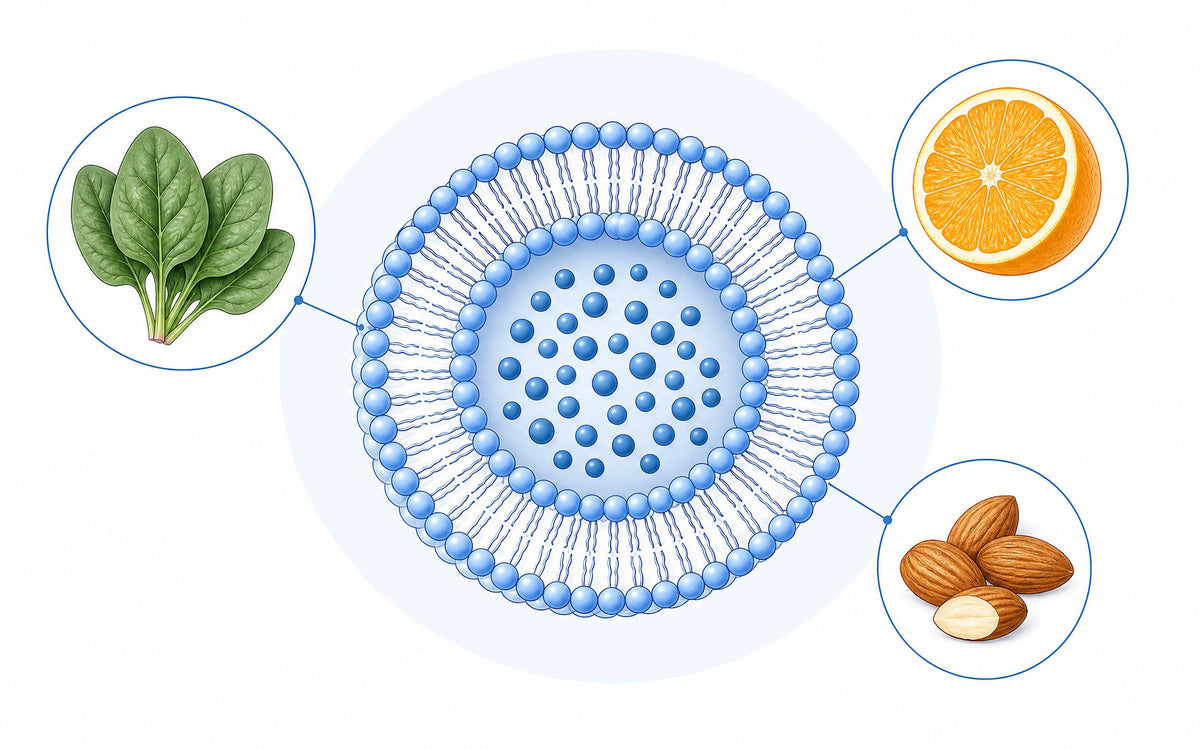
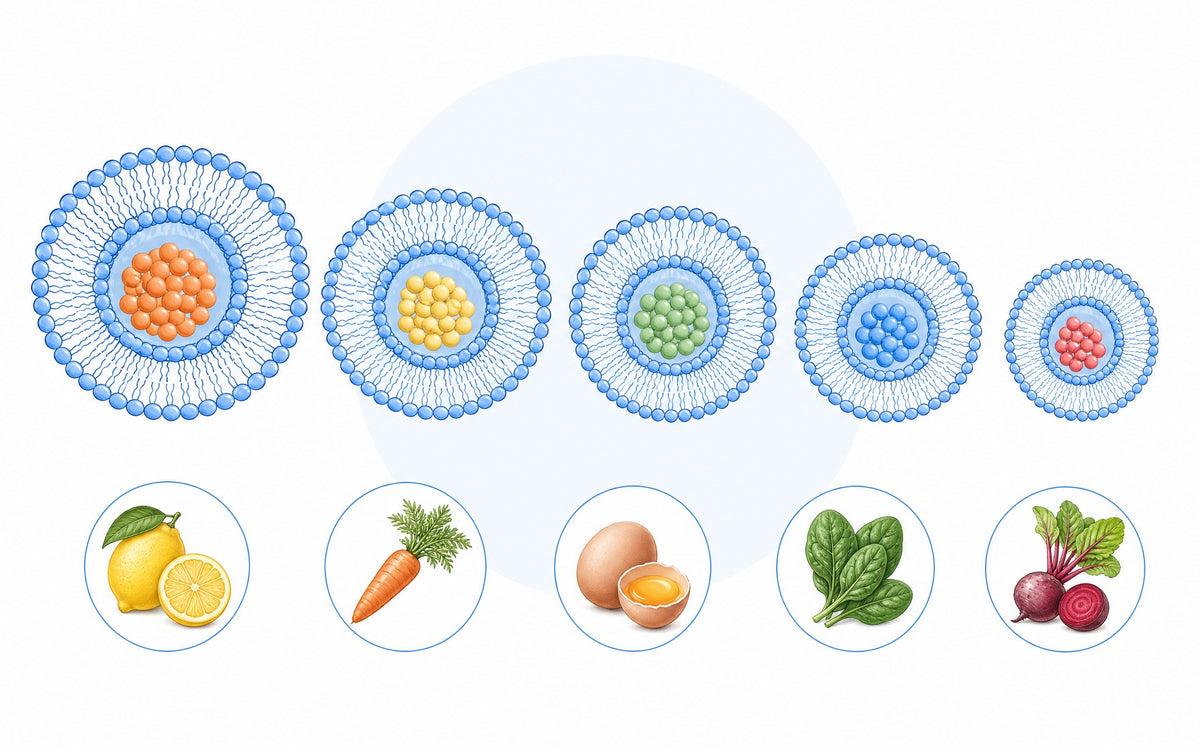
Overall, the picture has shifted since 1992: the early single-dose study found no appreciable rise, whereas the study of daily use over six months did1,2. For liposomal forms, the first small studies show higher blood levels3,4. At Melinava, we use phospholipids from European sunflowers for our liposomal products.
Frequently asked questions about glutathione absorption
Can you take glutathione by mouth?
Yes. In one study, blood levels rose with daily use over several months, whereas in an older single-dose study they didn’t rise appreciably1,2. If you take any medicines, check with your doctor first. Do not exceed the recommended daily amount.
Which form of glutathione is most likely to reach the blood?
We didn’t find any large studies comparing the forms. In one small, open-label study, the peak level with a liposomal form was about six times as high as with conventional glutathione4. For more on timing, see our article on when to take glutathione.
Are there studies on S-acetyl glutathione?
EFSA has assessed the safety of this form and considers up to 300 mg per day safe for adults5. We didn’t find a published study of how well it’s absorbed in humans.
Sources
- Witschi A, Reddy S, Stofer B, Lauterburg BH (1992). The systemic availability of oral glutathione. European Journal of Clinical Pharmacology 43(6):667-669. DOI
- Richie JP Jr, Nichenametla S, Neidig W, et al. (2015). Randomized controlled trial of oral glutathione supplementation on body stores of glutathione. European Journal of Nutrition 54(2):251-263. DOI
- Sinha R, Sinha I, Calcagnotto A, et al. (2018). Oral supplementation with liposomal glutathione elevates body stores of glutathione and markers of immune function. European Journal of Clinical Nutrition 72(1):105-111. DOI
- Prasad KN, Chandrashekar C, Karthik Y, Vasantha GG, Phadnis S (2026). Liposomal glutathione outperforms plain glutathione in uptake, cell regeneration and systemic availability: evidence from cellular and human models. British Journal of Nutrition 135(9):956-963. DOI
- EFSA Panel on Nutrition, Novel Foods and Food Allergens (NDA), Turck D, Bohn T, et al. (2026). Safety of S-acetyl glutathione as an novel food pursuant to Regulation (EU) 2015/2283. EFSA Journal 24(9):e10258. DOI
This article is for general information only and should not replace medical advice. Food supplements are not a substitute for a balanced and varied diet and a healthy lifestyle.
Written by
Melinava Editorial Team