
Your cart is empty

In this article
At a glance
- If you’re wondering whether to take NAD or NADH, you’re looking at one and the same coenzyme in two states. The two constantly convert into each other in your cells, and NADH is the reduced form, the one carrying electrons.
- NMN and NR are precursors the body uses to make NAD. Important building blocks for it also come from vitamin B3.
- NMN isn’t authorised as a food in the EU (as of October 2026). One form of NR is authorised as a novel food.
- There are no authorised health claims for NAD, NADH or NMN.
Start reading about NAD and you’ll soon come across a whole string of similar abbreviations. Some name the same molecule in a different state, others a precursor. It’s easy to lose track, so this article sorts the terms out one by one.
What is NAD?
NAD stands for nicotinamide adenine dinucleotide. It’s a coenzyme, a helper molecule that enzymes need to do their work. In the body, NAD is involved in many processes in the cells, including energy metabolism1.
The body makes NAD itself. Important building blocks for it come from vitamin B3, also known as niacin2. There are authorised health claims for niacin, for example: ‘Niacin contributes to normal energy-yielding metabolism’3.
NAD or NADH: what’s the difference?
NAD comes in two states. NAD+ is the oxidised form and NADH the reduced form of the same molecule1. In metabolic processes, NAD+ picks up electrons and so becomes NADH. Elsewhere, NADH hands the electrons back and becomes NAD+ again.
So the two forms switch back and forth all the time inside your cells. That’s why experts often just say ‘NAD’ when they mean both1. If you’re asking whether to take NAD or NADH, then, you’re comparing two states of the same molecule.
NMN and NR: precursors of NAD
NMN stands for nicotinamide mononucleotide and NR for nicotinamide riboside. Both are precursors the body uses to build NAD2. In a study of 65 healthy adults, NAD levels in the blood rose to a similar extent after 14 days with NR and with NMN, but not with nicotinamide. Most of the authors were employed by a food company2.
One reason these substances attract interest is that NAD levels fall as we get older. However, a review concludes that it’s still an open question whether higher NAD levels from these precursors also change how the body functions. The studies were often small, and doses and durations varied widely4. Our article on understanding the evidence from studies explains how to put results like these into context.
NMN in the EU: what’s the status?
In the EU, NMN counts as a novel food. That means it can only be sold as a food once it has been assessed and authorised5.
In May 2026, the European Food Safety Authority (EFSA) published an opinion. In it, EFSA assesses synthetically produced NMN in food supplements at up to 300 mg a day as safe for adults, with the exception of pregnant and breastfeeding women6. But an opinion isn’t yet an authorisation.
NMN isn’t on the Union list of authorised novel foods, according to the official consolidated version of 10 August 2026, and we found no later authorisation as of October 2026. By contrast, nicotinamide riboside chloride, one form of NR, has been authorised since 20207.
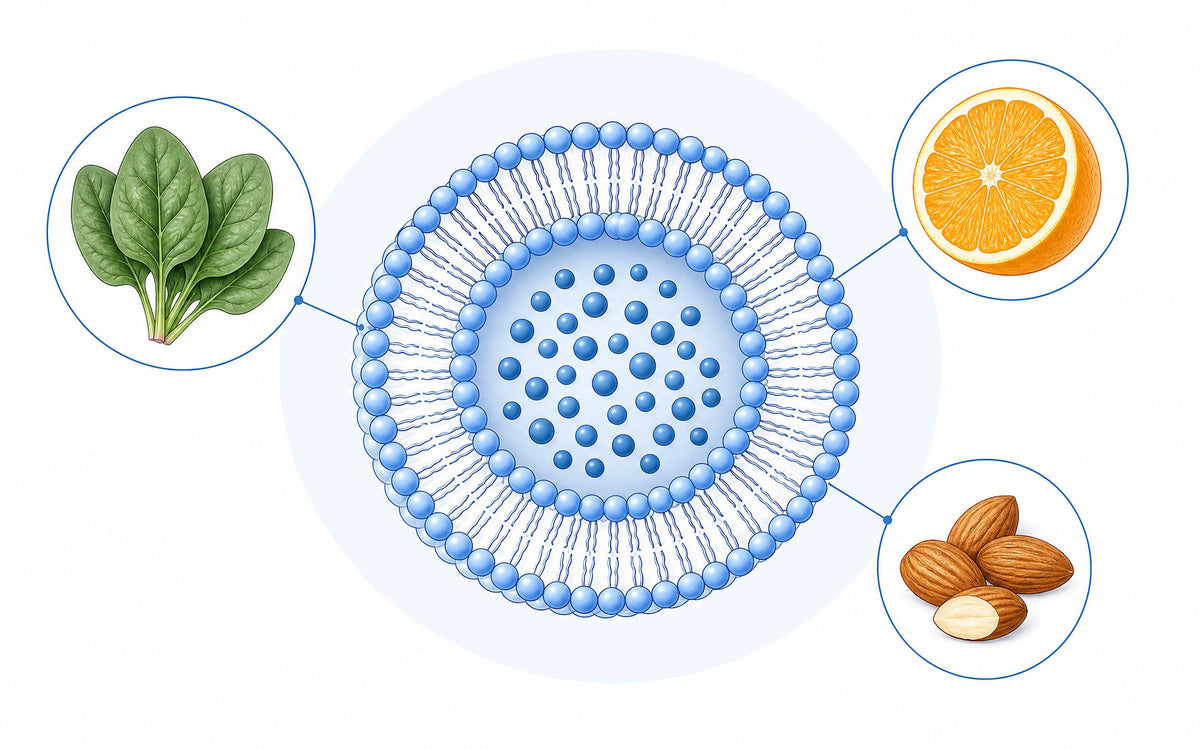
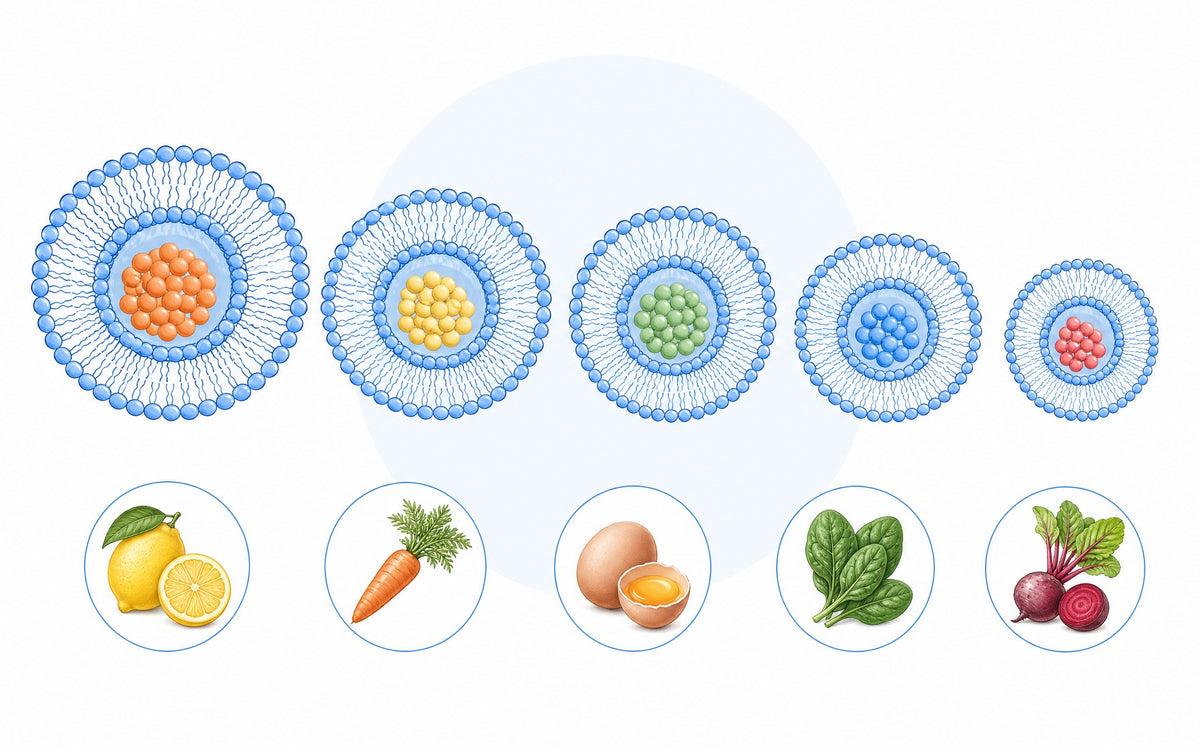
Good to know: ‘Liposomal’ only describes how a substance is formulated: it’s enclosed in tiny vesicles made of phospholipids. The formulation doesn’t change how the substance is classified in law. So liposomal NMN is no more authorised as a food in the EU than NMN in any other form.
NAD, NADH or NMN: what to look out for
These questions will help you choose.
- What is it? NADH is the coenzyme itself, in its reduced form. NMN and NR are precursors the body uses to make NAD.
- Is it authorised? With precursors, it’s worth checking their status in the EU. NMN currently isn’t authorised as a food, but nicotinamide riboside chloride is.
- What’s on the label? A good product states clearly which substance it contains and how much, and makes no promises about health or ageing.
- How is it formulated? In liposomal products, the substance is enclosed in liposomes. Our article on what liposomes are explains what that means.
Don’t take more than the recommended daily amount, and if you take any medicines, check with your doctor first.
Frequently asked questions about NAD, NADH and NMN
NMN or NADH: which should I take?
NMN is a precursor of NAD and isn’t authorised as a food in the EU (as of October 2026)5,7. NADH is the reduced form of the coenzyme itself. There’s no authorised health claim for either.
Liposomal NAD: what is it?
Liposomal means the substance is enclosed in tiny vesicles with a shell of phospholipids. In liposomal NADH, the reduced form of the coenzyme sits inside these vesicles. At Melinava, the phospholipids in our liposomal products come from sunflowers grown in Europe.
What does liposomal NADH do?
There’s no authorised health claim for NADH, which is why we don’t describe any effect here. The body’s own NADH is part of the NAD system, which is involved in many processes in the cells1.
Sources
- Nobile M, Fontanini V, Serrao S, Burtscher J, Re F, Paglia G (2026). Targeting NAD Homeostasis: Compartmentalization, Quantification, and Modulation. Metabolites 16(5):338. DOI
- Christen S, Redeuil K, Goulet L, et al. (2026). The differential impact of three different NAD(+) boosters on circulatory NAD and microbial metabolism in humans. Nature Metabolism 8(1):62-73. DOI
- European Commission (2012). Commission Regulation (EU) No 432/2012 of 16 May 2012 establishing a list of permitted health claims made on foods, other than those referring to the reduction of disease risk and to children’s development and health. Link
- Freeberg KA, Udovich CC, Martens CR, Seals DR, Craighead DH (2023). Dietary Supplementation With NAD+-Boosting Compounds in Humans: Current Knowledge and Future Directions. The Journals of Gerontology: Series A 78(12):2435-2448. DOI
- European Commission (2023). EU Novel Food status Catalogue: Nicotinamide mononucleotide (purity is 95-99%). Link
- EFSA Panel on Nutrition, Novel Foods and Food Allergens (NDA), Turck D, Bohn T, et al. (2026). Safety of beta-nicotinamide mononucleotide (β-NMN) pursuant the regulation (EU) 2015/2283 and the bioavailability of nicotinamide from this source in the context of Directive 2002/46/EC. EFSA Journal 24(5):e10007. DOI
- European Commission (2026). Commission Implementing Regulation (EU) 2017/2470 of 20 December 2017 establishing the Union list of novel foods (consolidated version of 10 August 2026). Link
This article is for general information only and should not replace medical advice. Food supplements are not a substitute for a balanced and varied diet and a healthy lifestyle.
Written by
Melinava Editorial Team