

Your cart is empty

In this article
Key facts at a glance
- Taking hyaluronic acid and applying it to your skin are two different routes, and one doesn’t rule out the other. Applied, it stays on or in the uppermost layers of the skin; swallowed, it travels through the digestive tract.
- Your body makes hyaluronic acid itself. It can bind a lot of water, and about half of all the hyaluronic acid in your body is in the skin.
- There are studies on both routes that measured skin moisture and elasticity. There is no authorised health claim for hyaluronic acid.
- Choose whichever suits your routine and how your skin feels, or combine the two.
Most people know hyaluronic acid from skin care. Now it also comes in capsules and liquids that you swallow, so it’s only natural to wonder which is the right way to use it. The short answer: these are two different routes, each with its own studies, and you don’t have to pick just one.
What is hyaluronic acid?
Hyaluronic acid is a substance your body makes itself, and it’s found in many tissues. About half of the body’s hyaluronic acid is in the skin1. It can bind particularly large amounts of water, which is why it’s regarded as central to the skin’s moisture2.
With age, and through environmental factors, the skin loses moisture2. That explains why hyaluronic acid is so widely used in skin care.
Applying it: what happens on the skin?
Hyaluronic acid is a common ingredient in serums and creams. How deep it gets into the skin depends on the size of its molecules. In a laboratory test on samples of human skin, hyaluronic acid with small molecules passed through the outermost layer of the skin (the stratum corneum), while hyaluronic acid with large molecules did not3.
In one study, 76 women aged 30 to 60 applied a cream containing 0.1% hyaluronic acid around one eye twice a day for 60 days, and a cream without hyaluronic acid around the other eye. Afterwards, measured skin moisture and elasticity were higher on the side treated with hyaluronic acid4.
Serums and creams usually contain other substances besides hyaluronic acid. If your skin is sensitive, patch test a new product on a small area first. Liposomes are used in cosmetics too, as our article on liposomes in creams, gels and sprays explains.
Taking it: what have studies measured?
A review and meta-analysis looked at randomised studies on food supplements and skin moisture in healthy adults. With oral hyaluronic acid, measured skin moisture was on average higher than with placebo. The studies included usually lasted no more than 24 weeks, and no safety concerns came up in them5.
In a more recent study of 150 healthy adults, participants took 60 mg or 120 mg of hyaluronic acid, or a placebo, every day for twelve weeks. In the 120 mg group, skin moisture and elasticity were higher afterwards than with placebo; in the 60 mg group, the differences were similar but smaller6.
How hyaluronic acid gets from the gut to the skin has so far been studied mainly in animals and cell models1. In experiments with rats and dogs, the radiolabel from swallowed hyaluronic acid was detected in the skin, bones and joints, among other places7.
Good to know: Studies on both applying and taking hyaluronic acid mostly ran for a few weeks to a few months4,5. For both routes, several of the papers cited here involved authors employed by companies1,3,6. The hyaluronic acid studied came from other manufacturers, and the results describe hyaluronic acid in general, not one specific product.
Taking or applying hyaluronic acid: how to decide
The two routes work at different points. These questions can help you choose.
- Routine: a serum becomes part of your morning or evening skin care, while a supplement is taken with the same meal each day. Choose whichever fits more easily into your day.
- How your skin feels: if your skin reacts to a lot of skin-care products, a supplement may be the more comfortable option, because nothing goes on your skin.
- Where it acts: applied, hyaluronic acid works at the surface of the skin; taken, it goes via the digestive tract. You can combine the two.
Don’t take more than the recommended daily amount, and if you take any medicines, check with your doctor first.
Frequently asked questions about hyaluronic acid
Is it worth taking hyaluronic acid?
There is no authorised health claim for hyaluronic acid. In studies, measured skin moisture after several weeks of taking it was on average higher than with placebo5. Whether taking it suits you also depends on what fits more easily into your daily life.
Hyaluronic acid capsules or serum: which is right for me?
You apply a serum as part of your skin-care routine; you take capsules or a liquid with a meal. Choose whatever is easier for you day to day, or combine the two.
What does liposomal hyaluronic acid mean?
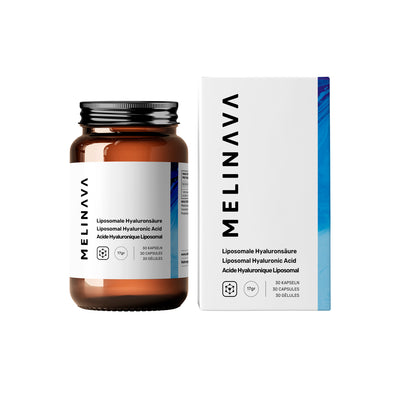
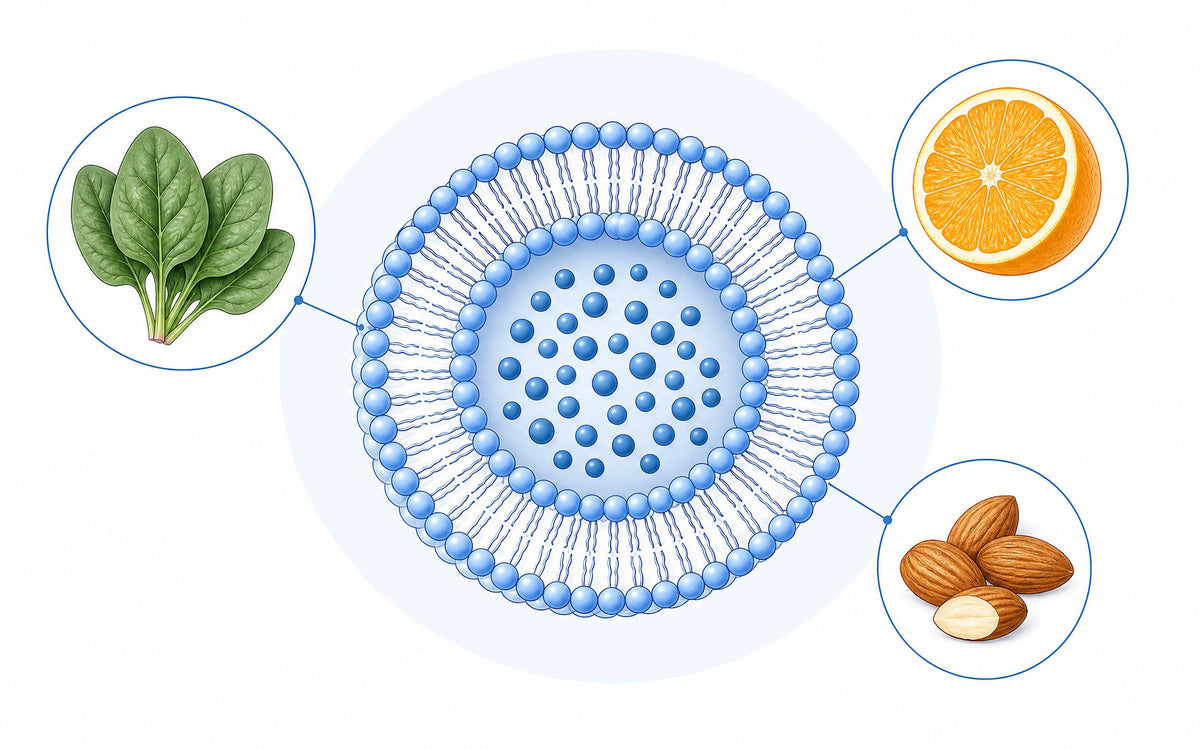
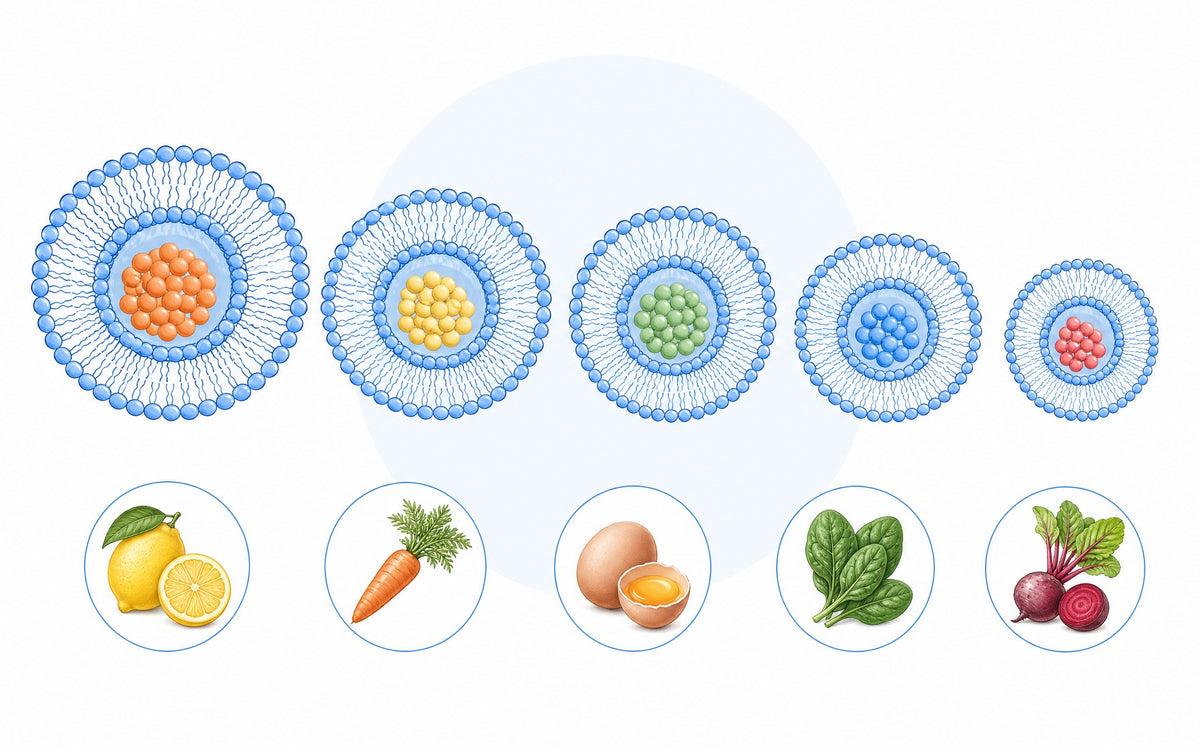
In liposomal hyaluronic acid, the substance is enclosed in liposomes: tiny vesicles with a shell of phospholipids. There is no authorised health claim for hyaluronic acid, which is why we don’t describe any effect here. At Melinava, it’s available as our Liposomal Hyaluronic Acid. For our liposomal products, we use phospholipids from European sunflowers.
Related product
Liposomal Hyaluronic Acid
Manufactured to European pharmaceutical quality.
£35.00
View product
Sources
- Kawada C, Yoshida T, Yoshida H, et al. (2014). Ingested hyaluronan moisturizes dry skin. Nutrition Journal 13:70. DOI
- Papakonstantinou E, Roth M, Karakiulakis G (2012). Hyaluronic acid: A key molecule in skin aging. Dermato-Endocrinology 4(3):253-258. DOI
- Essendoubi M, Gobinet C, Reynaud R, Angiboust JF, Manfait M, Piot O (2016). Human skin penetration of hyaluronic acid of different molecular weights as probed by Raman spectroscopy. Skin Research and Technology 22(1):55-62. DOI
- Pavicic T, Gauglitz GG, Lersch P, et al. (2011). Efficacy of cream-based novel formulations of hyaluronic acid of different molecular weights in anti-wrinkle treatment. Journal of Drugs in Dermatology 10(9):990-1000. PubMed
- Sun Q, Wu J, Qian G, Cheng H (2022). Effectiveness of Dietary Supplement for Skin Moisturizing in Healthy Adults: A Systematic Review and Meta-Analysis of Randomized Controlled Trials. Frontiers in Nutrition 9:895192. DOI
- Dolečková I, Kušnierik P, Berka V, et al. (2025). Oral sodium hyaluronate improves skin hydration, barrier function and signs of aging: a randomized, double-blind, placebo-controlled trial in 150 healthy adults. Scientific Reports 16(1):2941. DOI
- Balogh L, Polyak A, Mathe D, et al. (2008). Absorption, uptake and tissue affinity of high-molecular-weight hyaluronan after oral administration in rats and dogs. Journal of Agricultural and Food Chemistry 56(22):10582-10593. DOI
This article is for general information only and should not replace medical advice. Food supplements are not a substitute for a balanced and varied diet and a healthy lifestyle.
Written by
Melinava Editorial Team