
Your cart is empty

In this article
- Key points
- What is cortisol?
- Stress symptoms: how do you know it's too much?
- Too much cortisol: when should you see a doctor?
- Reducing stress: what helps in everyday life
- Ashwagandha and cortisol: what the studies measured
- Magnesium and B vitamins: nerves and mind
- Melatonin: which claims are authorised?
- Frequently asked questions about cortisol and stress
- Sources
At a glance
- Cortisol is a hormone made by the adrenal glands. It helps your body respond to stress, and its level is normally at its highest in the morning1.
- If you want to lower cortisol, start with everyday life: enough sleep, exercise, time in green spaces and regular breaks. For sleep and for time in nature, there are studies that measured cortisol2,3.
- In studies of ashwagandha, cortisol levels were lower than with a placebo. On how stressed people felt, the difference was not clear-cut4.
- Magnesium and several B vitamins contribute to normal functioning of the nervous system and to normal psychological function. Melatonin contributes to the reduction of time taken to fall asleep5.
A packed diary, worries on your mind, nights when you can't settle. Stress is part of life, and a little of it even helps you get things done6. Too much stress, though, can take its toll on body and mind6. That's when many people start wondering how to lower their cortisol. This article explains what the hormone does and what studies show about everyday habits and nutrients.
What is cortisol?
Cortisol is a hormone produced by the adrenal glands, two small glands that sit on top of the kidneys1. It acts on almost every organ in the body: it helps you respond to stress and plays a part in inflammation, blood sugar, metabolism and blood pressure1. That's why it's often called the stress hormone1.
Your cortisol level changes over the course of the day. It is normally highest in the morning and considerably lower by the afternoon1. Stress and exercise make it rise too1. So a rise when you're under pressure is part of your body's normal response.
Stress symptoms: how do you know it's too much?
Stress makes it hard to switch off. Many people become irritable or anxious and find it harder to concentrate6. The body reacts as well, for example with headaches or other aches and pains, stomach problems or trouble sleeping6. Some people eat less than usual, others more6.
Stress that goes on for a long time can make existing health problems worse6. If the strain is constantly affecting your daily life, get help, for example from your GP6.
Too much cortisol: when should you see a doctor?
Persistently and markedly raised cortisol levels are something quite different from everyday stress. They may point to Cushing's syndrome, a condition in which the body is exposed to too much cortisol over a long period1. The cause is often long-term use of high-dose corticosteroids (steroid medicines), and less often a hormone-producing tumour1. Possible signs include weight gain, a rounded face, thin arms and legs, and bruising easily1.
Whether your cortisol is too high can only be confirmed by blood, urine or saliva tests, often taken at several times of day1. Never stop prescribed steroid medicines on your own, because stopping suddenly also throws your hormone levels out of balance1.
Reducing stress: what helps in everyday life
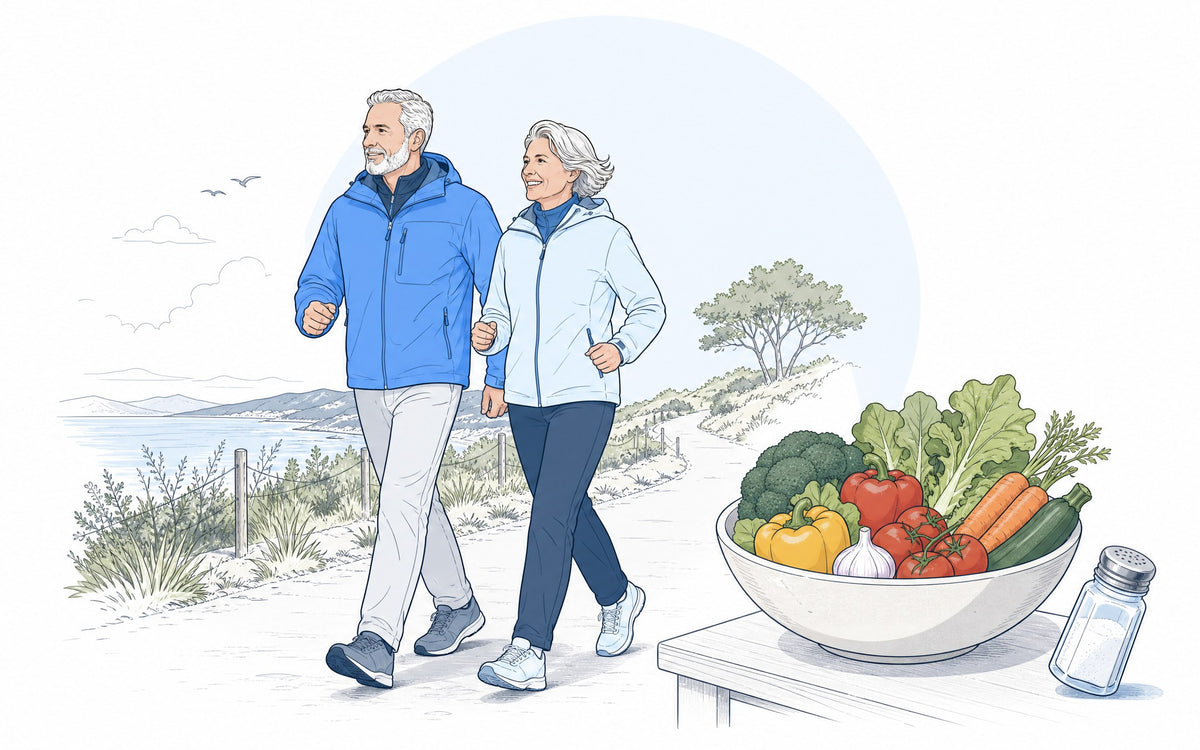
The World Health Organization (WHO) recommends some simple steps: a regular daily routine, enough sleep, keeping in touch with people you trust, a balanced diet, regular exercise and limiting how much time you spend following the news6. For some of these, cortisol has been measured, as the following sections show.
Sleep
In a study of healthy young men, evening cortisol after a night of severely restricted sleep was 37% higher than on the previous day, and after a night with no sleep at all it was 45% higher2. Regular bedtimes, a quiet, dark bedroom and little screen time before bed are among the WHO's recommendations6. It's also best to avoid large meals, caffeine and alcohol in the evening6.
Time in nature
In one study, 36 city dwellers spent ten minutes or more in nature at least three times a week for eight weeks3. Their salivary cortisol fell by 21% per hour more than its usual daily pattern would lead you to expect3. Measured per minute spent outdoors, the effect was greatest at 20 to 30 minutes3. The group was small, however.
Meditation
For meditation, the picture is mixed. In a systematic review, blood cortisol fell more with meditation than in comparison groups, but mainly in people with a physical illness7. In saliva samples, the effect was small and not clear-cut7.
Ashwagandha and cortisol: what the studies measured
Ashwagandha (Withania somnifera) is a plant whose root is traditionally used for stress in Ayurvedic medicine4. In a meta-analysis of seven studies on cortisol, levels with ashwagandha were on average 1.16 µg/dl lower than with placebo4. For perceived stress, measured with a questionnaire, the same analysis found no clear difference4.
Another review of nine studies reached a similar result for cortisol8. The studies lasted 30 to 112 days and varied widely in the extracts and amounts used, and none of them looked at possible long-term effects8. You'll find the details in our article on what the studies on ashwagandha and cortisol examined.
If you're thinking of trying ashwagandha and you take any medication, get medical advice first.
Magnesium and B vitamins: nerves and mind
There is no authorised health claim for any nutrient in relation to psychological stress, but there are claims about the nerves and the mind. Magnesium contributes to normal functioning of the nervous system and to normal psychological function5. The same applies to vitamin B6, vitamin B12, thiamine (vitamin B1) and niacin: each contributes to normal functioning of the nervous system and to normal psychological function5. Magnesium and several B vitamins also contribute to a reduction of tiredness and fatigue5.
If you'd like to top up your magnesium intake, a magnesium supplement is one option. Do not exceed the recommended daily amount.
Melatonin: which claims are authorised?
Stress costs many people their sleep6. For melatonin, there is an authorised health claim relating to falling asleep: melatonin contributes to the reduction of time taken to fall asleep5. The beneficial effect is obtained by consuming 1 mg of melatonin close to bedtime5. There is no authorised claim for melatonin relating to stress or cortisol5.
A second claim is also authorised: melatonin contributes to the alleviation of subjective feelings of jet lag. The beneficial effect is obtained with a minimum intake of 0.5 mg to be taken close to bedtime on the first day of travel and on the following few days after arrival at the destination5.
Frequently asked questions about cortisol and stress
How can I lower my cortisol?
Start with sleep, exercise and breaks6. In studies, evening cortisol was higher after too little sleep, and after time in nature it fell by more than its usual daily pattern would explain2,3. Persistently and markedly raised levels need to be looked into by a doctor1.
What happens if you have too much cortisol?
A short-term rise in cortisol under stress is normal1. But if your body is exposed to too much cortisol over a long period, Cushing's syndrome can develop, with signs such as weight gain, a rounded face and thin arms and legs1. Have this checked by a doctor.
How can I reduce stress?
A regular daily routine, enough sleep, exercise, a balanced diet and contact with people you trust help many people6. Spending less time on the news can also ease the strain6. If stress is constantly ruling your daily life, get support6.
What does melatonin do?
Melatonin contributes to the reduction of time taken to fall asleep when 1 mg is consumed close to bedtime5. It also contributes to the alleviation of subjective feelings of jet lag5. If you're unsure, speak to your GP about whether melatonin is suitable for you, especially if you take any medication.
Sources
- National Library of Medicine, MedlinePlus (2024). Cortisol Test. Link
- Leproult R, Copinschi G, Buxton O, Van Cauter E (1997). Sleep loss results in an elevation of cortisol levels the next evening. Sleep 20(10):865-870. DOI
- Hunter MR, Gillespie BW, Chen SY (2019). Urban Nature Experiences Reduce Stress in the Context of Daily Life Based on Salivary Biomarkers. Frontiers in Psychology 10:722. DOI
- Albalawi AA (2025). Dual impact of Ashwagandha: Significant cortisol reduction but no effects on perceived stress. A systematic review and meta-analysis. Nutrition and Health 31(4):1395-1408. DOI
- European Commission (2012). Commission Regulation (EU) No 432/2012 of 16 May 2012 establishing a list of permitted health claims made on foods, other than those referring to the reduction of disease risk and to children’s development and health (consolidated version of 17 May 2021). Link
- Weltgesundheitsorganisation (2026). Stress. Questions and answers. Link
- Koncz A, Demetrovics Z, Takacs ZK (2021). Meditation interventions efficiently reduce cortisol levels of at-risk samples: a meta-analysis. Health Psychology Review 15(1):56-84. DOI
- Della Porta M, Maier JA, Cazzola R (2023). Effects of Withania somnifera on Cortisol Levels in Stressed Human Subjects: A Systematic Review. Nutrients 15(24):5015. DOI
This article is for general information only and should not replace medical advice. Food supplements are not a substitute for a balanced and varied diet and a healthy lifestyle.
Written by
Melinava Editorial Team